How a Gin Bar Supports Craft Cocktail Culture
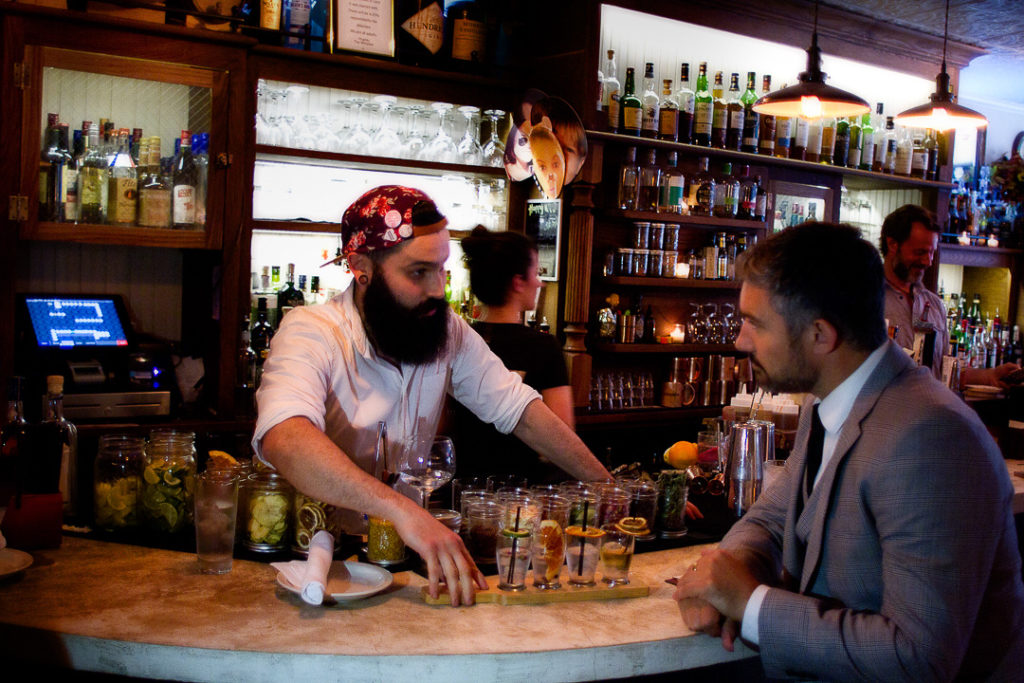
A good Gin Bar does more than serve martinis under flattering light. At its best, it acts as a working archive, a training ground, a testing lab, and a public classroom for craft cocktail culture. It gives bartenders room to refine technique, guests a place to sharpen their palate, and producers a stage where nuance has a chance to matter.
That role has become more important over the past decade. Cocktail culture has matured beyond novelty. Guests who once ordered by spirit category alone now ask about style, region, proof, distillation method, and garnish. They notice whether the tonic is too sweet, whether the citrus oil was expressed properly, whether a stirred drink lands glossy and cold rather than watery and tired. In that environment, a specialist venue can influence standards in a way a generalist bar rarely can.
Gin is particularly well suited to this role because it rewards attention. Unlike some spirits that ask for years of aging before complexity develops, gin can express detail through botanical choice, base spirit character, distillation method, and blending decisions. A London dry built around juniper and citrus speaks differently from a contemporary gin that leans into saline notes, green herbs, or floral lift. Put twenty such bottles on a back bar and you do not just have inventory. You have a conversation about style, technique, and taste.
Why specialization matters
Specialization can be dismissed as a marketing angle, but anyone who has spent time behind a serious bar knows otherwise. Focus changes behavior. When a venue commits to gin as a category, it has to think harder about curation, storage, menu design, glassware, ice, carbonation, citrus sourcing, vermouth freshness, and staff education. The details stop being decorative and become structural.
That focus often improves quality in quiet ways that guests may not immediately name, even though they feel the difference in the glass. Take a simple gin and tonic. In a casual setting, it can be treated as an easy build, poured without much thought. In a strong Gin Bar, it becomes a calibrated serve. The bartender considers the gin’s botanical profile, the sweetness and bitterness of the tonic, the size and density of the ice, the shape of the glass, the garnish oils, and even how much agitation to introduce during the build. A guest may only register that it tastes crisp and alive rather than flat and sugary, but that gap is the whole story of craft.
The same applies to classics. A Negroni can be equal parts and still feel wrong if the gin lacks backbone, the vermouth has oxidized, or the dilution misses by fifteen seconds. A Martini can be iconic or forgettable based on freezer temperature, vermouth ratio, lemon quality, and whether the bartender understands texture as well as strength. A specialist bar cannot hide behind broad offerings. Its identity depends on getting these calls right.
A Gin Bar gives craft standards a public home
Every mature drinks culture needs places where standards are visible. Not abstract, not hidden in trade seminars, but present on a busy Friday night when the room is full and choices matter. That is one of the most useful functions of a Gin Bar.
The public often encounters “craft” as a vague promise. Handmade. Small batch. Artisanal. Those words can mean almost nothing when they are detached from observable practice. In a serious bar, practice is the point. You can see whether citrus is cut to order. You can taste whether vermouth is protected and fresh. You can watch the pace of stirring, the way a bartender handles carbonated mixers, the discipline around measured pours, the care given to garnish selection. Those are not performative details. They are the mechanics that turn ingredients into consistent drinks.
A focused venue also has fewer excuses for mediocrity. If gin is the headline, guests rightly expect breadth and depth. That pressure can be healthy. It pushes operators to stock more than the obvious bottles, to rotate seasonal serves, to update specifications, and to train new staff beyond brand talking points. In many cities, the bars that end up shaping local cocktail culture are not necessarily the flashiest ones. They are the rooms where standards hold on a quiet Tuesday as well as a packed Saturday.
Education happens table side, not just behind the bar
One of the biggest contributions a Gin Bar makes to cocktail culture is education that never feels like a lecture. Guests come in for a drink and leave with a more precise understanding of what they like.
That education works because gin is unusually readable. If a bartender pours two gins side by side, one juniper forward and dry, one softer and more floral, the contrast is immediate. A guest does not need years of tasting experience to notice the difference. Once that difference is clear, broader lessons open up. Why does one gin disappear under tonic while another cuts through? Why does a savory garnish make one pour sing and bury another? Why does the same bottle behave differently in a Martini, a Collins, and a Martinez?
These are not academic questions. They shape how people order, what they buy, and what they come to value. Many regulars begin with a familiar template, perhaps a G&T or a dry Martini, then gradually branch into more spirit-forward or historically informed drinks because a bartender gave them context and confidence. I have seen guests who once insisted they disliked gin discover that what they actually disliked was poor tonic balance, aggressive cucumber garnish, or a style of gin that did not suit their palate. A knowledgeable bar can separate category from bad experience.
This matters for the wider craft scene because informed guests raise the floor. When people learn to recognize freshness, balance, and stylistic intent, they reward bars that care and drift away from those that coast. Taste becomes a form of accountability.
The back bar as a living library
A thoughtful gin selection does not need to be enormous, but it does need to tell a coherent story. Too many venues mistake quantity for expertise. One hundred bottles that repeat the same citrus-floral profile do less for cocktail culture than thirty that illustrate real stylistic range.
A strong Gin Bar treats the back bar like a library collection. There are dependable reference texts, bottles every bartender should know and every guest should understand. There are regional variations that reveal how local botanicals and regulatory traditions shape character. There are contemporary expressions that push style boundaries without losing technical integrity. There are also workhorse bottles that perform especially well in mixed drinks, because scholarship means little if the drinks themselves do not deliver.
That curation has ripple effects. Distillers benefit when bars can explain what sets their gin apart without resorting to hollow hype. Bartenders benefit because they learn comparative tasting in a practical context, not just from distributor decks. Guests benefit because they can explore with guidance rather than gamble blindly on a premium price tag.
There is also a commercial discipline here. Gin can be deceptively tricky inventory. Opened bottles move at different rates, niche labels tie up cash, and guest recognition varies wildly. A good operator balances education with movement. Some bottles earn their place as menu anchors, some as occasional features, some as tasting flight components. The goal is not to display esoteric stock for status. It is to use the range in a way that keeps the category alive and legible.
Technique becomes visible when the spirit is transparent
Gin has very little room to hide mistakes. Barrel age does not soften rough handling. Heavy sugar cannot rescue every imbalance. A poorly made gin drink often tastes exactly like what went wrong.
That transparency is useful. It makes gin a demanding but fair medium for developing bar craft. Stirring technique matters because over-dilution blurs botanical definition. Shaking matters because texture and aeration can either brighten citrus and herb notes or leave them jagged. Ice matters because cloudy, fast-melting cubes can collapse a long drink within minutes. Vermouth handling matters because stale fortified wine flattens a Martini more quickly than most guests realize.
When a bar commits to excelling at gin, it usually tightens its systems across the board. Freezer programs become more disciplined. Draft or bottled tonic choices get reviewed more critically. Garnish prep becomes less decorative and more intentional. Jiggers get used consistently. Glasses are chilled properly. Even service language tends to improve because staff need a shared vocabulary to guide guests through subtle choices.
Those habits do not stay confined to gin drinks. They spill into every spirit category the team handles. That is one reason specialist bars often punch above their apparent niche. By obsessing over one category, they end up sharpening the whole operation.
Classic cocktails stay alive through repetition and restraint
Craft cocktail culture sometimes gets distracted by invention for its own sake. Newness has value, but so does disciplined repetition. A Gin Bar supports the culture by keeping classic templates in active service and refusing to treat them as museum pieces.
Consider the Martini. There are few drinks more discussed and more routinely mishandled. At a serious gin-focused venue, the Martini becomes a daily exercise in judgment. How cold should it be served? Which glass shape preserves temperature best in this room? How dry is “dry” for this guest? Which vermouth complements a high-coriander gin versus a juniper-heavy London dry? Is the olive adding salinity and depth, or simply masking a mismatch in structure?
That kind of repetition refines both recipe and palate. Bartenders learn that tiny changes have outsized effects. Guests discover that preference can be articulated more clearly than “strong” or “smooth.” The culture benefits because classics remain living forms, still tested and adjusted under real service conditions.
The same is true for the Negroni, the Tom Collins, the Gimlet, the Martinez, the Last Word, and countless house variations that descend from them. A focused bar keeps these templates in circulation and, just as important, keeps them honest. Not every classic needs reinvention. Sometimes the most craft-driven choice is to leave a formula mostly intact and execute it with precision.
Innovation works better when it has a backbone
A Gin Bar can also push cocktail culture forward, but the best innovation usually grows out of technical fluency rather than novelty chasing. Gin is fertile ground for this because its botanical range invites experimentation. Tea infusions, savory saline components, lacto-fermented produce, unusual tinctures, clarified fruit, and regional herbs can all play well with gin if the structure stays coherent.
The challenge is knowing where to stop. Gin already carries aromatic complexity. Add too many competing modifiers and the drink turns diffuse. I have tasted more than a few ambitious gin cocktails that seemed built from a brainstorming session rather than a palate. Sixteen ingredients, three house infusions, a smoke element, and a garnish that looked expensive but contributed nothing. The result was usually muddy.
The bars that genuinely influence craft culture understand that innovation needs editing. They might use one unusual ingredient, or one unexpected technique, in service of a clear idea. Perhaps a saline-finishing touch sharpens a coastal-style gin. Perhaps a lightly carbonated herb cordial turns a highball into something more textural and precise. Perhaps a clarified milk punch reframes familiar botanicals without burying them. The point is not complexity as a badge. The point is a better drink.
Guests can feel the difference between invention with backbone and invention without it. So can younger bartenders, who are often looking for models of how to be creative without becoming chaotic.
A specialist bar gives distillers meaningful feedback
Craft cocktail culture is not sustained by bars alone. Distillers, distributors, importers, and educators all shape the ecosystem. A good Gin Bar helps connect those parts because it generates informed feedback under real market conditions.
Distillers often hear broad praise or rejection, but not always useful detail. A specialist venue can provide more. Which serves are resonating? Does a particular gin excel in a Martini but disappear in a longer build? Are guests responding to the label story while staff struggle with the liquid in cocktails? Does the proof support structure, or does it thin out after dilution? Those questions matter for future releases and positioning.
This relationship can improve local scenes substantially. Small distillers, especially newer ones, benefit from honest responses from bartenders who actually put bottles into service. That is different from trade show enthusiasm. It can lead to better products, stronger collaborations, and more grounded expectations on both sides.
There is a caution here too. Bars should not become unpaid showrooms for every new launch. Curatorial independence matters. The venues that truly support cocktail culture are selective. They taste critically, buy carefully, and champion what performs rather than what arrives with the loudest PR push.
Staff development is part of the culture, not separate from it
A room can have excellent bottles and still fail the culture if its team lacks confidence or depth. One of the strongest signs of a valuable Gin Bar is how it develops staff.
Training in these venues tends to be tactile and comparative. Bartenders taste gins side by side. They build the same drink with different bottles and note what changes. They discuss tonic sugar levels, garnish interaction, stirring times, freezer temperatures, and guest communication. None of that is glamorous, but it is the work that turns enthusiasm into competence.
Over time, those bartenders carry standards outward. Some move into other programs and raise the level there. Some become beverage directors, brand ambassadors, or consultants. Some open their own places. This is how specialist venues exert influence beyond their square footage. They become apprenticeship spaces for taste and technique.
It is worth saying that this kind of development costs money. Tasting stock, slower training shifts, breakage, and staff time are real expenses. So are retention risks once people become more skilled. Yet bars that skip this investment often pay in other ways through inconsistency, lower guest trust, and weak identity. In craft culture, human knowledge is infrastructure.
The guest experience is more welcoming than people assume
There is a persistent fear that specialist bars can become gatekeeping spaces, all codes and no hospitality. Some do fall into that trap. They recite brand trivia, correct guests unnecessarily, or make curiosity feel like a test. That behavior shrinks the culture rather than supports it.
The best Gin Bar feels different. Expertise is present, but service remains generous. A guest who wants a straightforward G&T gets one, made well, without condescension. A guest who wants to compare three styles can do that too. Someone who says, “I usually hate gin,” is treated as a conversation, not a challenge.
That balance matters because craft culture only grows when standards and welcome coexist. If a bar becomes too intimidating, it turns craft into theater for insiders. If it becomes too casual about quality, it loses the very standards that make specialization worthwhile. The sweet spot is knowledge delivered with ease.
Atmosphere plays a role here. Lighting, music, menu language, seating comfort, and pacing all affect whether guests are willing to explore. A dense menu full of unexplained house terms can shut people down fast. So can a room that prioritizes visual concept over practical service. By contrast, a concise menu with a few useful descriptors often opens more doors than a wall of cryptic poetry.
Price, access, and the limits of influence
Not every contribution a Gin Bar makes is positive by default. Craft culture has a cost problem, and specialist bars are not immune. Premium gin, quality mixers, labor-intensive prep, and urban rent can push pricing to levels that narrow the audience. A £16 or $20 cocktail may be justified by inputs and labor, but it still changes who gets to participate regularly.
This is where judgment becomes important. A bar that wants to support culture rather than merely signal status should think carefully about accessibility. That might mean maintaining one or two simpler serves at friendlier prices, offering half pours or tasting measures, building educational flights thoughtfully, or designing a happy hour that preserves quality without pretending margins do not exist. None of those choices are easy, especially in high-cost cities, but they can widen the circle.
There is also the issue of trend fatigue. Gin has had periods of explosive popularity, followed by moments when operators moved on to agave, low-ABV aperitifs, or minimal-intervention wine. A true Gin Bar does not survive on trend energy alone. It survives because it treats the category as substantial enough to outlast fashion. That requires steady standards, flexible menu thinking, and a willingness to evolve without abandoning core identity.
What the culture looks like when a Gin Bar gets it right
You can usually tell within one visit whether a Gin Bar is genuinely supporting craft cocktail culture or simply borrowing its language. The signs are practical. Drinks taste deliberate rather than merely expensive. Staff can explain differences without giving a speech. Classics feel sharp and current. House creations have Gin Bar The Winslow a clear point of view. The bottle selection reflects curation, not clutter. Guests at different levels of knowledge all seem comfortable ordering.
When those elements come together, the bar does something rare. It makes craft visible, repeatable, and enjoyable. It preserves older forms without freezing them. It rewards technique without making technique the performance. It creates demand for better distilling, better service, and better drinking habits.
That is why the category still matters. A Gin Bar is not just a place with many gin labels. It is one of the clearest examples of how specialization can enrich the wider cocktail landscape. Through curation, education, discipline, and hospitality, it helps turn mixed drinks from a commodity into a craft people can actually taste.
The Winslow
243 E 14th St
New York, NY 10003, United States
Phone: +1 212-777-7717
FAQ About Gin Bar
How to do a gin tasting?
Start with a small pour and gently smell the gin before taking a small sip. Notice its juniper, citrus, floral or spice notes, then compare how the flavor changes with a little water or tonic. At a gin bar, ask the bartender to explain the selection and botanical pairings.
How to make the best tasting gin and tonic?
Use chilled gin, fresh tonic and plenty of ice. A common starting ratio is one part gin to two parts tonic, adjusted to taste. Choose a garnish that complements the gin's botanicals and stir gently to preserve the bubbles.
What is the smoothest tasting gin?
There is no single smoothest gin for everyone. Perceived smoothness depends on the botanical recipe, alcohol strength, serving temperature and mixer. Describe whether you prefer citrus, floral, herbal or juniper-forward flavors so a bartender can suggest a suitable style.